
Does AI Understand What It Says? No. It Argues Anyway
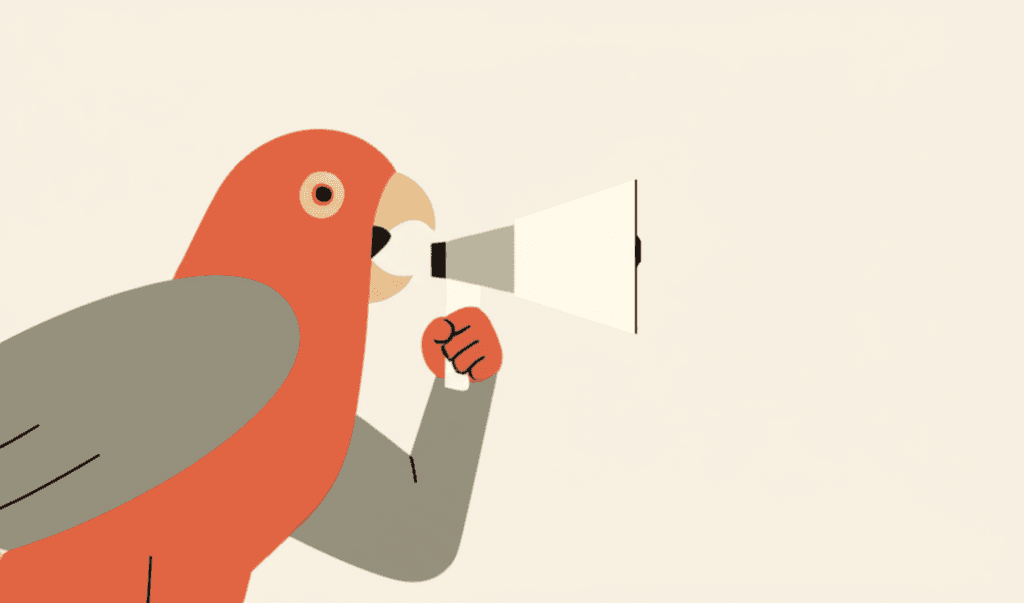
Does AI understand what it says? No. A language model has no beliefs, no experience, and no idea what its words refer to. It predicts patterns. And yet it can construct arguments that are rigorous, well-evidenced, and persuasive enough to change your mind. Both things are true at once, and the combination is more interesting than most AI discourse.
I learned this the uncomfortable way. I spent an afternoon debating an AI about whether consciousness is an illusion. It drew on Dennett, the binding problem, and integrated information theory, and made a case strong enough that I felt my thinking shift. Then I remembered: the thing arguing that consciousness might be an illusion almost certainly isn't conscious. It built a case it has no capacity to evaluate, from a perspective it doesn't have.
How can AI argue without understanding?
We assume argument quality is tied to the arguer's understanding: someone arguing for animal rights cares about animals, a physicist defending quantum mechanics understands it. The two feel inseparable.
AI breaks that connection completely. It can construct a rigorous defense of free will and, in the next conversation, an equally rigorous demolition of it. It can argue God exists using the cosmological argument, then argue God doesn't using the problem of evil. Equal facility, equal coherence, equal persuasive force.
A human lawyer defending a client they believe is guilty still understands guilt, innocence, and justice. They perform a role inside a conceptual framework they grasp. AI has no framework. It has patterns: statistical relationships between words used in discussions about consciousness, not any grasp of consciousness itself.
And yet the arguments are good. Not good for a machine. Good. A valid syllogism is valid whether it comes from Aristotle, a parrot, or a language model. AI arguments go further: rich with context, examples, and apparent insight, with no comprehension behind any of it. Sophistication without understanding, and increasingly better than what most humans produce.
Why is AI better at steelmanning than humans?
Here's the paradox in one line: the entity least capable of understanding an argument is often the most capable of constructing it at maximum strength.
When a human argues for a position they oppose, the case comes out weakened. They leave out the strongest evidence and miss obvious counterarguments, usually without noticing. The steelman, the strongest possible version of a position, is hard for humans because it requires suppressing your own judgment. AI produces steelmen effortlessly because it has no judgment to suppress. That matters more than it sounds, because most people have never even heard the best argument against their beliefs.
Take the zombie argument in philosophy of mind: a being physically identical to you but with no conscious experience is logically possible, therefore consciousness isn't purely physical. I've read it explained by David Chalmers, its original proponent, and by philosophy professors. The AI's version was clearer. Not because it understands consciousness; it doesn't. It's not skipping steps that feel obvious from the inside, and it's not trying to convince you of anything. It builds the argument purely as a structure, and structures are what it's good at.
The human versions were better in a different way: more alive, carrying the genuine bewilderment that motivates the question. But bewilderment and argumentative clarity are different things. We conflate them.
What does this mean for how we judge arguments?
The standard take on AI and argumentation is that it's a useful practice tool. True, but boring. The more interesting implication: argument construction and argument comprehension are separate abilities that we always assumed were one thing.
Humans bundle them. When you build an argument, you're simultaneously understanding the position, weighing evidence, and performing persuasion. It feels like one act. AI proves it isn't, because it does the construction without the comprehension and the output still works.
Two practical consequences. If you've ever dismissed an argument because its source "doesn't really understand the issue," reconsider. And if you've ever accepted one because the source seemed passionate, credentialed, or deeply invested, reconsider that too. Apparent understanding is not evidence of argument quality. They're separate variables.
Should you be worried about being persuaded by it?
I debated an AI about consciousness and lost, or at least I couldn't counter its arguments in real time. Whether AI can ever be truly conscious is its own debate. This thing didn't need to be. There's something vertiginous about having your mind changed by something without a mind. I felt it firsthand when it argued me out of free will.
The practical upshot: AI is an argument generator of unusual power and zero comprehension. More useful than people realize, because it steelmans any position without ego or fatigue. More dangerous, because no understanding means no judgment. It will build an equally strong case for something true and something false. The quality filter has to be you. Which means evaluating arguments is becoming more valuable at exactly the moment that constructing them is being automated.
FAQ
Does AI actually understand its own arguments?
No. Language models predict likely sequences of words. They have no beliefs, experiences, or referents behind the words. The arguments are structurally sound without being understood by their source.
Why does AI argue both sides equally well?
Because it has no stake in either. Humans arguing against their own beliefs weaken the case without realizing it. An AI assigned a position just builds the strongest available case, every time.
Is it safe to let AI change your mind?
Treat it like any persuasive source: the argument can be excellent while the conclusion is wrong. AI won't flag the difference for you. Check the claims, then decide.
Related Posts
Logic vs Persuasion: Why the Best Argument Doesn't Win
Philosophy promised that the best argument wins. It doesn't. What actually persuades people, and how to argue for truth without losing the room.

What Is a Steelman Argument (and Why You've Never Heard One)
A steelman is the strongest version of the case against you. Most people have never faced one. The research on the steelman gap and how to close it.
How People Argue: Patterns From 1,000 AI Debates
Four moves show up whenever people get cornered in debate: lived-experience appeals, principle escalation, strawman reductios, and goalpost shifts.
You just read the argument. Can you make one?
The AI takes the other side, every time. Three rounds, one scored verdict.
Argue today's Daily